

I took every prostate pill my doctor prescribed for 3 years, then ended up in A&E at 3 a.m. with a tube inserted into my penis.
How a 63-year-old man went from an emergency catheter to urinating like he was 20 again, after discovering why his doctor's pills were making his prostate worse.


need to tell you about the worst night of my life.
But first, I want you to understand something: I did everything right.
I took my pills every single day. Never missed a dose. Followed my urologist's instructions to the letter for over three years.
And yet I still ended up in the emergency room at 3 a.m. with a nurse inserting a catheter into my penis while my wife watched from the corner of the room, crying.
If you're a man over 55 struggling with prostate problems — waking up multiple times a night, a weak urine stream, that constant feeling of never fully emptying your bladder — I'm sharing my story because I don't want what happened to me to happen to you.
Because here's what nobody told me:
Every man with benign prostatic hyperplasia knows that feeling. You're standing at the toilet, pushing, waiting… and somewhere in the back of your mind is always that voice: "What if one day nothing comes out at all?"
I used to think that was just anxiety. I didn't know it could actually happen. Until it did.
But as terrible as that night was, I'm actually grateful it happened. Because it sent me down a path I never would have found otherwise — one that led me to discover the exact reason why prostate medications never truly work.
There's a hidden cause your urologist will never mention. One that explains why your prostate keeps getting worse no matter how many prescriptions you take or how strictly you follow your doctor's advice.
And once I discovered it, everything changed.
In the next few minutes, I'm going to show you exactly what that cause is, why standard treatments are practically designed to fail, and the simple method that finally let me urinate like a teenager again — and cancel the surgery my doctor swore I needed.
Keep reading. This could spare you the nightmare I lived through.
It started the way it does for most men.

I was 59 when I first realised something was seriously wrong.
I was standing at a urinal in a restaurant bathroom, absolutely desperate to go, and nothing would come out. Just a weak trickle that kept stopping and starting.
A man walked in, used the urinal next to mine, finished, washed his hands, and left.
And I was still standing there.
The symptoms had been building for months:
◉ Waking up four times a night.
◉ That stop-start stream.
◉ The urgency gave me maybe 90 seconds to find a bathroom.
◉ That frustrating feeling of never having fully emptied — so I'd stand there an extra minute, just to make sure.
Then I'd zip up, take three steps, and still feel a little leak in my underwear anyway.
You know how this goes. You're probably living it right now.
At first I thought it was just part of getting older. But then 90 minutes became the maximum I could go without needing a bathroom. I'd get there desperate, and nothing would come out.
My GP referred me to a urologist. He examined me, ran some tests, and gave me the diagnosis I already expected:
Benign prostatic hyperplasia. Your prostate is enlarged.
He said it like he'd said it a thousand times before. He probably had.
"It's very common at your age," he assured me. "We'll prescribe tamsulosin. Most people call it Flomax. It should help with your flow."
That same afternoon, I picked up the prescription, thinking my problems were solved.
Five prescriptions over three years. Not one of them worked.

✗ Tamsulosin.
✗ Then alfuzosin — which gave me heart palpitations that genuinely scared me.
✗ Then silodosin — a nightmare of side effects, no better results.
✗ Then finasteride.
I'd avoided it for months because of the horror stories I'd read online. Men who lost their libido permanently. Depression. Brain fog that never lifted. My doctor insisted it was safe.
By the third month, things "down there" weren't the same. Weaker erections. Less desire. My wife noticed. I noticed. He said it was probably just age.
I stopped taking it anyway.
Despite all of this — all the pills, all the side effects, all the "adjustments" — my symptoms never improved much. Each new medication helped a little at first. Then the effect plateaued. It stopped working. The symptoms came back. So we'd increase the dose or try another pill.
And all that time, my life was quietly shrinking.
Before going anywhere, I'd scope out where the bathrooms were. I couldn't last 90 minutes without stopping. Going out with friends became a calculation: How far is the restaurant? Where will I sit? How fast can I get to the toilet if I need to?
Intimacy with my wife had faded too.
But I kept taking my pills. I told myself: At least I'm managing. At least it's not getting worse.
Here's what haunts me now:
While I was faithfully taking those pills every day, thinking I was treating my prostate…
My prostate was getting worse.
I just didn't know it yet.
My bladder retained 900ml of urine.

It was a Tuesday in May. Around 2:30 in the morning.
I woke up with the usual pressure. The urge to go. Nothing unusual — by this point I was getting up at least three times every night.
I shuffled to the bathroom, half asleep. Stood in front of the toilet. And waited.
Nothing.
Pushed a little. Relaxed. Tried again.
Nothing.
Sat down — that used to help.
Still nothing.
One minute became five. Five became ten.
And then the pain started.
Not the usual discomfort. This was different. A growing pressure in my lower abdomen, like something was about to burst.
I looked down and could see my stomach visibly distended — bloated from a bladder that couldn't empty.
I started sweating.
Fifteen minutes gone. Still nothing. The pain was worsening.
I called to my wife. "Margaret. Something's wrong."
She found me hunched over, gripping the wall. I couldn't stand up straight anymore.
"We're going to hospital," she said.
I didn't argue.
The drive to A&E took 15 minutes but felt like an hour. I felt like my bladder was going to explode. Every bump in the road sent unbearable pain through my pelvis. I was groaning. Whimpering. Making sounds I didn't know a grown man could make.
A 63-year-old man, crying like a child.
At the hospital they saw me quickly. The nurse used a term I'd only heard in my nightmares:
"Acute urinary retention."
I had over 900 millilitres of urine in my bladder. Nearly a full litre. And it wouldn't come out on its own.
They needed to insert a catheter.
If you've never had this done, I hope you never have to.
A thin tube is threaded through the urethra all the way into the bladder. It's not so much the pain — they use anaesthetic gel.
It's the violation.
The helplessness of lying on a table while a stranger inserts a tube into the most intimate part of your body.
While your wife of 38 years watches from a chair in the corner, tears running down her face.
When the urine finally began to flow, the relief was immediate. The pressure was gone. The pain stopped.
But it wasn't over.
I was sent home with the catheter still in. A bag strapped to my leg that I'd have to drain, hide from visitors, and sleep with.
For a full week.
Seven days feeling like a broken old man.
Seven days of shame.
My urologist finally told me the truth.

A week later, once the catheter was removed, I sat across from my urologist.
I was furious. Confused. And frightened.
"I took every pill you gave me," I said. "For three years. How did this happen?"
He leaned back in his chair.
And what he said next changed everything.
"William, the medications help control your symptoms. They relax the muscles around the prostate so urine can flow more easily. But they don't stop the prostate from continuing to grow. Your prostate has enlarged considerably since we started treatment."
I stared at him.
"So while I was taking all those pills… my prostate was getting worse the entire time?"
He nodded.
"That's the nature of BPH. It's progressive. Medications can help manage it, but they don't address the underlying cause."
I wanted to flip the desk over.
Three years of pills. Three years of side effects. Dizziness. Retrograde ejaculation. Heart palpitations. Hundreds spent on prescriptions and co-pays and specialist visits.
And my prostate had been getting worse the entire time.
The medications weren't fixing anything. They were just masking symptoms while the real problem grew underneath. Like putting a plaster over a wound that's still bleeding internally.
No wonder I'd ended up in A&E.
My urologist just shrugged it off, as if this was perfectly normal. He told me to keep taking my pills and accept that this could happen again any night.
Or worse.
His solution? Surgery. A TURP procedure — transurethral resection of the prostate.
But I'd done my research. I knew what could happen.
Risks of TURP surgery:
⚠ Incontinence — men who leak urine for the rest of their lives and need to wear pads.
⚠ Erectile dysfunction. Permanent retrograde ejaculation. A 20% failure rate within five years.
⚠ And the one that haunted me most: waking up from surgery needing a catheter for life.
After what I'd just been through, I wasn't ready to take that gamble again.
There had to be another way.
I stayed up for two weeks searching for answers.

I must have looked like a madman.
Three in the morning. Kitchen table covered in printouts. Empty mugs everywhere. Reading glasses sliding down my nose.
Margaret was asleep upstairs. She didn't know I'd been doing this every night for two weeks.
I was looking for something. Anything. A reason why the medications hadn't worked. A different approach that didn't involve someone cutting into me.
Most of what I found was useless. Same old advice: take the pills, try surgery, accept it. Thousands of men in forums asking the same questions I was. Getting the same vague answers.
But buried in the noise, I started noticing something. A handful of men who had actually gotten better. Not "better managing their symptoms." Actually better. Sleeping through the night. Strong flow. No urgency. Cancelling their surgeries.
And they weren't talking about Flomax or finasteride. They were talking about something completely different.
I almost scrolled past one thread, thinking it was spam. But something made me click.
A man posted his before-and-after flow rate results. His doctor accused him of faking them. He mentioned a name I'd never heard before.
Dr. James Bennett.
I typed it into Google. And that's when everything started making sense.
This urologist refuses to take the same pills he prescribes.

I looked him up. What I found grabbed my attention immediately.
The man was a board-certified urologist. Twenty-five years of experience. Had worked at two major university hospitals.
But here's what made me sit up straight:
He had BPH himself.
Diagnosed at 54. The same symptoms I was dealing with. Night urgency. Weak stream. That constant feeling of never emptying completely.
And when his symptoms got worse?
He refused to take the same medications he'd been prescribing to his own patients for two decades.
I remember reading that and thinking: Wait. A urologist who won't take his own medicine?
That's when I knew I needed to hear what this man had to say.
I found an interview he'd given to an online health publication. It was long — nearly an hour. I watched the whole thing.
About 20 minutes in, he said something that hit me like a freight train.
According to Dr. Bennett, the reason prostate medications never fully work — the reason symptoms get worse no matter how many pills you take — is because they're designed to treat the wrong problem.
They treat the pressure. But they ignore the original cause of the pressure.
He called it "prostatic suffocation."
And once he explained it, I couldn't believe nobody had told me this before.
The "sludge" that's blocking your prostate right now.

Dr. Bennett explained it in a way that finally made me understand.
"The prostate constantly converts testosterone into a hormone called DHT," he explained. "Every man's body does this. It's normal. But that conversion process produces waste — hormonal by-products that need to be cleared away."
"When you're young, your body clears this waste easily. No problem. But after 50? The clean-up slows down. And those hormonal waste products don't just disappear. They become a sticky, sludge-like residue that starts coating the inside of the tiny blood vessels feeding the prostate."
Year after year. Layer after layer.
And when enough sludge builds up? It starts blocking blood flow. The vessels narrow. Less oxygen-rich blood reaches the prostate cells.
And what happens when cells can't get the oxygen they need? Your body responds the only way it knows how: inflammation.
The prostate swells. Gets bigger. Presses against the urethra.
That's the pressure.
That's why your stream is weak. That's why you can't fully empty. That's why you're standing at the toilet at 3 a.m., pushing, waiting, praying something comes out.
I sat there at 4 in the morning thinking: Why on earth did no one tell me this?
The answer made me furious.
Because the medications they prescribe aren't designed to fix this. Flomax? It relaxes the muscles around the prostate to make urination easier right now. But the sludge keeps building underneath. Finasteride? It slows DHT production. But it doesn't address the hormonal waste already clogging those blood vessels.
These medications are designed to manage symptoms. Forever. You take them for life. You deal with the side effects for life. And your prostate keeps getting worse inside, so slowly you don't notice until you end up with erectile dysfunction or a catheter.
That's not a treatment. That's a business model.
3 simple steps to actually fix your prostate.

Dr. Bennett had spent years researching what it would actually take to reverse this situation. Not manage it. Reverse it.
And in the interview, he explained it simply:
If the problem is build-up in the blood vessels, you need to dissolve it. If the problem is blocked blood flow, you need to restore circulation. And if the problem is excess hormonal waste production, you need to reduce it at the source.
All three. At the same time. Miss one and you're back to square one.
Dissolve the Residue
Breaks down years of accumulated hormonal waste so blood can flow freely again.
Restore Blood Flow
Floods oxygen-starved cells with fresh blood. When cells can breathe again, inflammation calms, swelling reduces, and the pressure releases.
Regulate the Conversion
Slows the overproduction so the problem doesn't come straight back.
That's it.
No complicated protocols. No lifetime prescriptions. Just fix what's actually broken.
The formula he built to fix himself

Dr. Bennett didn't just explain the problem — he built something to solve it.
He'd spent two years developing a formula based on this research. Testing different ingredient combinations. Adjusting ratios. Looking for compounds that could achieve all three things in clinical doses — not the diluted amounts you find on a pharmacy shelf.
At first he wasn't promoting it publicly. He'd been using it on himself. Then on a small group of patients who had run out of options.
When I finally found a way to order it, my hands were shaking.
I'd been let down so many times. Three years of pills that didn't work. Hundreds and hundreds spent on prescriptions and supplements that did nothing.
But something about this felt different. Maybe because Dr. Bennett had the same condition I did. Maybe because the mechanism made sense. Maybe because I was just desperate enough to try one more thing.
I placed the order.
It's called Dernavex™.
And I had no idea it was about to change my life.
10 ingredients. Each one has a job.

Before I tell you what happened when I started taking it, let me explain what I was actually putting into my body. Because I'm not the type to just swallow something without knowing what's in it.
I rang customer service to ask questions. (Yes, I'm that person. I rang and asked.) The man who answered walked me through it step by step. Dr. Bennett had included 10 clinically studied ingredients in the formula, each targeting a specific part of the problem.
To Dissolve Accumulated Residue:
These compounds break down sticky hormonal waste at the molecular level, working like a deep cleanse for the prostate.
To Restore Blood Flow:
These help dilate blood vessels and allow oxygen-rich blood to return to weakened tissue.
To Regulate the Conversion:
These ingredients help regulate DHT conversion and protect the prostate long-term.
No proprietary blends. No mystery ingredients. 10 ingredients. Each one has a specific job.
I asked why I couldn't just buy these separately at a health food shop. He laughed.
"You could try. But you'd need about ten different bottles and you'd still get the wrong doses. Most supplements use a quarter of what the research actually shows works. It's cheaper that way."
That matched everything I'd learned about the supplement industry.
So I took a deep breath. And I started taking Dernavex™.
Week 1: I was about to write it off as a scam.

I'm not going to lie to you.
The first few days I felt like an idiot. I took my capsules with each meal, as the bottle instructed, and then stood in front of the bathroom mirror waiting for something to happen.
Nothing happened.
Still getting up three times a night. Still that weak, stop-start stream. Still standing at the toilet wondering if anything was going to come out.
My wife caught me timing my stream with my watch once.
"What are you doing?"
"Nothing."
She gave me that look. The one that says she knows exactly what I'm doing and thinks I've lost the plot.
By day five I was ready to write the whole thing off as another waste of money. But I'd paid for a three-month supply. And I remembered what Dr. Bennett said in that interview:
"It didn't take 20 years to build up this residue. It's not going to clear overnight. Can you give it 30 days?"
So I kept going.
Day 10: I woke up at 5:47 a.m. — because of the sunlight.
I woke up at 5:47 in the morning.
Not because I needed the toilet. Because sunlight was coming through the bedroom curtains.
I lay there for a second, confused. Disoriented.
Then it hit me.
I'd slept nearly six hours straight.
No bathroom at 2 a.m. No shuffling down the hallway at 4 a.m. Just… sleep.
I didn't want to jinx it. So I didn't say anything to Margaret. I just got up, went to the bathroom, and paid attention.
The stream was… different. Not perfect, but more consistent. Fewer interruptions. I finished faster than usual.
I told myself it might just be a good night. A fluke.
But that night, the same thing. I slept until 5:30.
And the night after that.
By the end of week two, I was only getting up once a night. Sometimes not at all.
Margaret noticed before I said a word.
"You're not getting up anymore," she said one morning over coffee. "I haven't heard you leave the bed in days."
Week three: I missed the toilet completely.
That's when I knew this was real.
Week three. Standing at the toilet on a Saturday morning.
And what came out stopped me cold.
A strong, steady flow. No hesitation. No stopping and starting. No straining.
Just… flowing.
Like a garden hose.
I missed the toilet. Hit the seat, the rim, a bit of the floor. And I didn't even care. I was thrilled about it.
For the first time in years, I had to aim. Because there was actual force behind it.
I stood there for a moment, just stunned.
It had been so long since I'd urinated like a normal person that I'd forgotten what it felt like.
That evening I told Margaret everything. The research. Dr. Bennett. Dernavex™. The reason I'd been acting strangely for weeks.
She cried.
Not because she was sad. Because she'd spent three years watching me shrink. Avoiding trips, dinners, visits to the grandchildren because I couldn't get too far from a bathroom.
And now I was coming back.
Month two: My urologist was speechless.

I had a follow-up appointment scheduled with my urologist. The same one who'd wanted to book me in for surgery.
Part of me wanted to cancel. I was feeling so much better and didn't want bad news. But I went anyway. I wanted to see the numbers.
He ran the tests. Checked my flow rate. Measured my post-void residual — the amount of urine left in your bladder after you've finished.
Then he looked up from his clipboard with an expression I'd never seen on him before.
"William… your flow rate has gone from 8 ml/s to 17 ml/s. Your residual volume has dropped from 140ml to 25ml."
He stared at me.
"These numbers are significantly better. What the hell are you doing?"
I just smiled.
He shook his head, still looking at my chart.
"Whatever it is, keep doing it. We can put the surgery conversation on hold."
Put the surgery on hold. Four words I never thought I'd hear.
I'm not the only one.

Arthur M., Age 69
I was on alfuzosin for two years. The heart palpitations got so bad one night that I genuinely thought I was having a heart attack. I stopped it immediately. Then I tried Flomax. The dizziness every time I stood up was unbelievable, I nearly fell down the stairs twice. My doctor then wanted to prescribe finasteride. I'd read enough about that drug. No thank you.
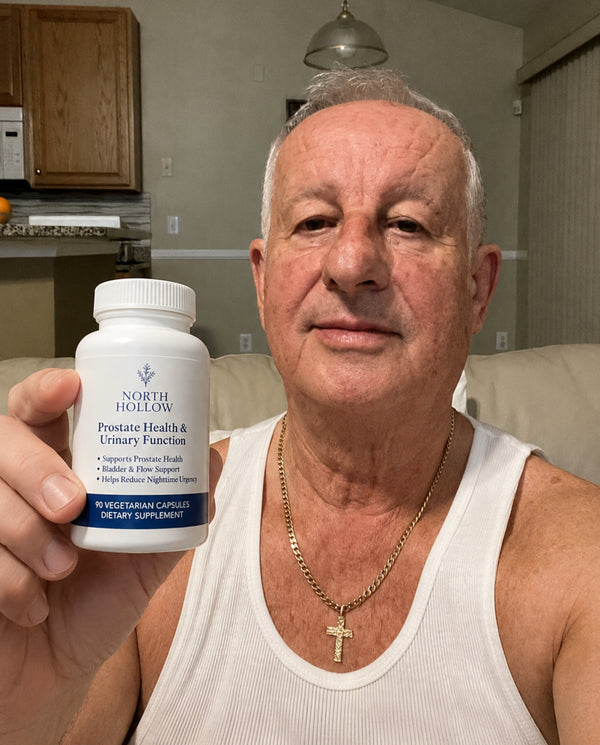
Dernavex took a few weeks to kick in. But now I'm sleeping until 4 or 5 in the morning instead of getting up at 1, 3, and 5 a.m. My flow is probably 70% of what it was when I was younger. No side effects whatsoever.

Eric C., Age 72
I had the Rezum procedure booked. Thousands of dollars out of my own pocket. Honestly, I was terrified, I kept reading about men who ended up needing a catheter for weeks. My wife found Dernavex and I told her it was probably a scam. But faced with paying thousands or trying one last thing, I decided to give it a go. First two weeks, nothing. I thought I was right. Week three, I slept until 5 a.m. without getting up once.
By week six, my flow was stronger than it had been in years. I actually had to re-aim, hadn't needed to do that in forever. I rang and cancelled the Rezum.

Oscar P., Age 71
My urologist laughed when I told him. Said I was throwing my money away on supplements. But I was getting worse on the medications, not better. Getting up 4 or 5 times a night. Weak flow even on the maximum dose of tamsulosin. I decided to give it 90 days. At the 6-week appointment, the doctor runs the flow test. He goes quiet. Looks up at me and says: what are you doing differently?
Flow rate doubled. Residual volume dropped significantly. He asked me to write down what I was taking. I'm not cured. Still get up once most nights. But once versus five? I can absolutely live with that.

Robert W., Age 67
6 years on Flomax. Six years. And the whole time, retrograde ejaculation. My wife and I basically stopped being intimate because what was the point? It affected my head more than I want to admit. I started Dernavex in September. Worked with my GP to taper off Flomax gradually. Had some rough patches where the urgency came back strong.
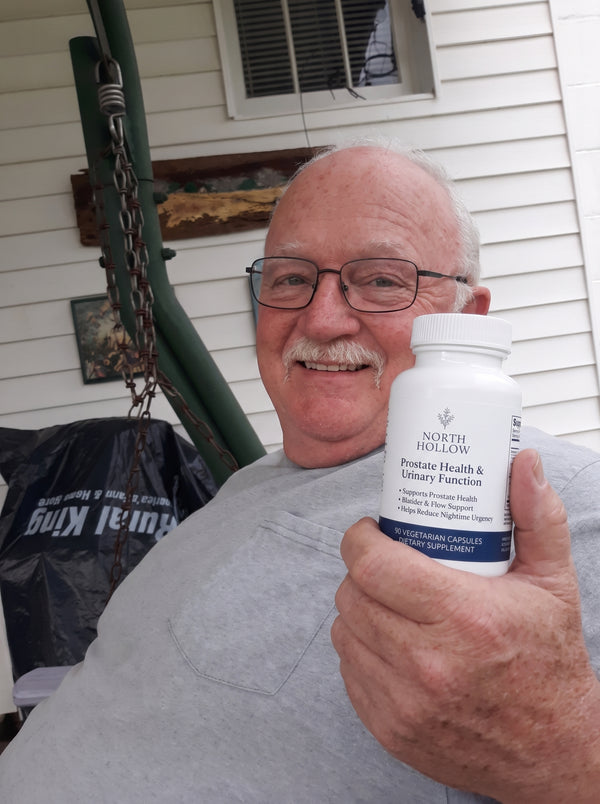
But now? Flow is good. Getting up once a night, sometimes not at all. And things are working again. For the first time in years. I'm not saying it's a miracle. But I got that part of my life back.
What you're probably wondering about the price.

When I first ordered Dernavex™, I paid full price for a one-month supply.
And I'd have paid three times that without hesitating.
After everything I'd already spent on prescriptions, co-pays, and specialist visits over three years — we're talking hundreds and hundreds — the cost of Dernavex™ was almost nothing by comparison.
But I know not everyone is in that position. And the truth is, the men who need this most are often the ones who've already exhausted their resources on the healthcare system. Men on fixed incomes. Men whose insurance doesn't cover half of what they need. Men who've burned through their savings on treatments that didn't work.
So when I reached out to Dr. Bennett's team to share my story, I asked for one thing:
"Can you make this more affordable for the men who read this?"
They told me they're currently running a limited-time promotion:
Buy 2 bottles, get 1 FREE — saving you up to 70% off the standard price.
That works out to less per day than a cup of coffee. Less than a single urologist consultation. Less than one month of Flomax. Less than the petrol I spent driving to specialists who couldn't help me.
And you need at least 30 days to fully clear years of accumulation. That's what Dr. Bennett recommends. That's what worked for me.
The guarantee my doctor never offered me.

30-Day Money Back Guarantee

Fast Delivery

Safe & Secure Payment

Hassle-Free Returns
Look, I know you've been burned before. So have I.
Three years of pills that didn't work. Supplements that were basically expensive urine. Doctors who shrugged and said: "That's just how it is."
So I asked Dr. Bennett's team about this. "What happens if someone tries it and it doesn't work for them?"
Here's what they told me:
30-Day Money-Back Guarantee.
Use Dernavex™ for a full three months. That's enough time to clear the build-up and see real results. If you're not sleeping better… if your flow isn't stronger… if you're not waking up less… if you don't feel like it's working — send the bottles back. Even if they're empty. Full refund. No questions asked.
No hassle. No return authorisation numbers. No arguments with a customer service rep reading from a script. Just email them with your order number and they'll refund you within 24 hours.
No doctor ever offered me that. No pharmacy ever said "if it doesn't work, we'll give you your money back." No urologist has ever had any skin in the game.
That's how confident they are. And after what this has meant for me and everyone else I've spoken to, I understand why.
You might not be able to order next week.
There's something I need to warn you about.
Last month I tried to order more Dernavex™ for my brother-in-law. Went to the website, clicked Add to Cart… and got a message saying it was sold out.
I panicked a bit. Rang their customer line.
A bloke told me they'd been out of stock for nearly three weeks. There's an issue with the French maritime pine bark extract — it has to come from a specific region and there'd been shipping delays.
I understand. That's how these things work. When you use real ingredients in real doses, you depend on supply chains.
But I'm telling you this because I don't want you coming back next week, finally ready to try it, and getting that same message.
Your prostate isn't going to wait while a shipping container sits in a port somewhere. Every night you're getting up four times is another night of accumulation. Another layer of sludge coating those blood vessels. One step closer to where I was.
If you can order today, do it.
I don't want you ending up in A&E like I did.
I'm sharing my story for one reason:
I don't want you ending up in the emergency room like I did.
I don't want you to experience the terror of standing at the toilet at 3 a.m. with nothing coming out and a growing pain in your stomach like a bomb about to go off.
I don't want you to know what it feels like to have a tube inserted into your penis while your wife cries in the corner.
I don't want you spending years on medications that mask your symptoms while your prostate keeps getting worse underneath.
If I'd known this three years ago — if I'd understood what was actually happening inside my prostate — maybe I could have avoided that night entirely.
That's my only regret. I wish I'd found it sooner.
Two paths. One decision.

Look, I've been exactly where you are. Waking up multiple times a night. Weak flow. That constant, maddening interruption. The permanent urgency. Maybe taking medications that give you dizziness, nasal congestion, or affect your sex life.
And somewhere in the back of your mind, always that fear: What if one night nothing comes out at all?
In my view, you've got two paths ahead of you.
Path 1: Keep Doing the Same
Keep taking pills that only mask your symptoms. Keep dealing with the side effects. Keep hoping your prostate doesn't get worse. Keep gambling every night when you go to bed, wondering if tonight is the night everything stops working.
Path 2: Try Something That Actually Works
Give Dernavex™ 30 days. Attack all three stages: the build-up, the blocked blood flow, and the DHT that keeps accumulating. See if you can finally urinate like a normal person again. Sleep through the night. Travel without having to map out every bathroom. Feel like yourself again.
I know which path I'd choose.
One last thing.
I'm 63 years old.
A year ago, I was mapping out the bathrooms at every place I went. Calculating how long I could last. Living my life in 90-minute intervals.
Every night, lying in bed, wondering: Is tonight the night nothing comes out?
That fear doesn't exist anymore.
I sleep through the night. I urinate like I'm 40 again. Last month I drove three hours to see my grandchildren — made one stop.
My urologist cancelled my surgery. My wife says I'm a different man.
Look, I'm not a doctor. I can't promise this will work for you.
But it worked for me. It worked for my brother-in-law. And dozens of other blokes who'd tried everything and were on the verge of giving up.
And here's what I know for certain:
Your prostate isn't going to heal itself.
Every night you're getting up four times is another night of accumulation. Another layer of sludge. One step closer to where I was — in A&E at 3 a.m. with a tube in my penis and my wife crying in the corner.
I wouldn't wish that night on anyone.
You've got 30 days to try it. If it doesn't work, you get every penny back.
But if you do nothing? You already know where that road leads.
Your prostate has been suffocating for long enough.

Buy 2 Get 1 Free for a Limited Time Only!
This limited-time deal is in high demand and stock keeps selling out.
Save Up To 70% OFFTry it today with a 30-Day Money Back Guarantee!
Frequently Asked Questions
I noticed the first real changes around day ten, longer stretches of sleep without getting up. The stronger flow came around week three. Full results took about 30 days as the build-up cleared. Dr. Bennett says that's typical.
Dernavex is a natural supplement with widely studied ingredients like saw palmetto, pumpkin seed extract, and quercetin. There shouldn't be significant interactions with standard medications, but please consult your doctor first.
I experienced none. Neither have any of the men I've spoken to in the forums. These are natural ingredients in clinical doses.
Three capsules a day, one with each meal. Breakfast, lunch, and dinner. One bottle lasts a full month.
You've got 30-day coverage. Use it for three months and if you're not satisfied, return the bottles, even if they're empty, for a full refund. No questions asked.
I'd recommend a minimum of three months. That's what worked for me and what Dr. Bennett suggests to clear years of build-up.
Dernavex is manufactured in a GMP-certified facility with third-party testing to verify purity and potency. No proprietary blends hiding behind clever names.
They sell direct to keep costs down and quality high, and major pharmacy chains probably aren't keen to stock a product that reduces the need for monthly prescription refills.

Finally something that actually works. Started Dernavex five weeks ago. Now I'm sleeping 5 or 6 hours straight.
My urologist wanted to prescribe Flomax. Found this instead and I've been on it 6 weeks. Flow is stronger, zero side effects.